
Mehak Aggarwal and her husband are the third generation running their family's pharmaceutical manufacturing business. Salus Pharmaceuticals operates a WHO GMP certified plant in Baddi, Himachal Pradesh, manufacturing tablets, capsules, and injections, including oncology products. A second unit, Sunvet Healthcare in Kala Amb, makes eye drops. The Baddi plant alone runs on around 300 people, 107 of them staff.
That is not a small operation. Pharma manufacturing is one of the most documented, most audited, most process heavy industries in India. Every batch has a record. Every deviation has a form.
And yet both owners were inside the plant seven days a week.
Daily firefighting in basic operations of manpower and production. Major growth-related talks and no higher order thinking.
That was Mehak's own description of her weeks. Not strategy. Not expansion. Manpower and production fires, every single day, in a business that was already third generation and already certified to global standards.
The part that should bother you
Here is the uncomfortable question. If a pharma plant already generates this much data, why were two capable owners still finding problems by standing on the floor?
Because data sitting in registers and batch records is not the same as data an owner can read. Nobody had translated the plant into a form that answered the only question that matters at the top: where is today's bottleneck?
The gap was never capability. Mehak and her husband run a plant that clears WHO GMP audits. The gap was that no tool existed to show them the business without them physically walking it. Someone had to sit with them, name the problem in their own language, and build the tools alongside them. That work took months, one dashboard at a time, and every dashboard removed one more reason to be on the floor.
What we installed
Dashboards. Not one master dashboard, but a set of them, built together over months of working side by side, each one answering a specific operational question.
We have built together lots of dashboards which now help me identify the bottleneck in just seconds.
Seconds. The thing that used to take a full day of walking the floor, asking supervisors, and cross checking registers now takes seconds from anywhere.
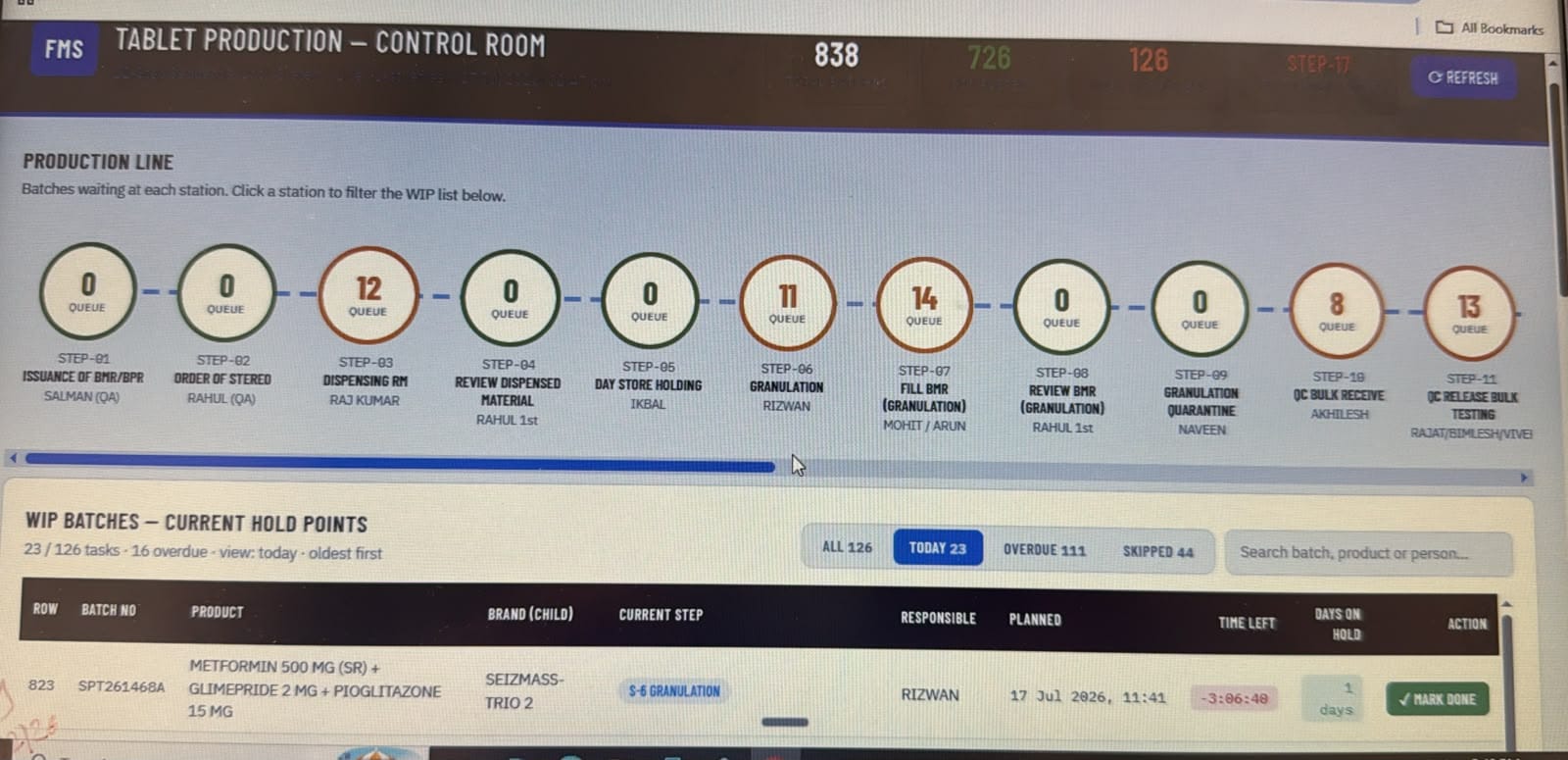
Here is what that changed in practice:
| Before | Now |
|---|---|
| Seven days a week inside the plant | One day a week. Monday. |
| Bottlenecks found by walking the floor | Bottlenecks identified in seconds on a dashboard |
| Chasing employees for updates | Employees run on the system, not on reminders |
| Late nights and business talk at the dinner table | Evenings, weekends, and trips are theirs again |
What moved
The numbers first. Time inside the plant dropped from seven days a week to one. Attrition dropped from 6% to 2.1%, because a team that is not being chased every day is a team that stays.
Then the compounding effect. With the plant no longer consuming every waking hour, the couple did something most manufacturers never find the bandwidth for. They wrote and launched a book, Killing Cancer: 13 Secrets of High-Stakes Pharma Manufacturing, with a media launch that got covered in more than 14 newspapers.

That is what the freed hours became. Not rest alone. Higher order work.
We got back our weekends and our trips. No more mobile phones on our trips.
And the deepest shift was not in the plant at all. It was in how they see their own job.
Earlier we used to believe that going to a plant all day and firefighting was our main job but now we understand being an entrepreneur and being a businessman and even a manager.
Mehak puts the whole transformation in one line:
Now we are not working inside the plant but on the plant.
The lesson sitting in plain sight
A third generation manufacturer, WHO GMP certified, 300 people, did not need more expertise in pharma. They needed the plant translated into a screen they could read in seconds. One clear problem, stated in the owner's own words, plus tools built patiently over months of working together. That formula turned a seven day firefighting job into a Monday visit.
Salus Pharmaceuticals manufactures tablets, capsules, injections, and oncology products in Baddi, Himachal Pradesh, and exports to markets across Africa and South Asia. If you want to see what a pharma plant that runs on systems looks like, that is where to look.
Your story is sitting in a drawer
Mehak told me this story in her own words. Now it is written up, published, and pointing readers to her business.
Some of you have your own version of this story. You took what we worked on together, went back to your business, and built it. The chasing stopped. A number moved. The evenings came back. Nobody online knows that you did it. Tell me what you built, and I will post it here just like this story.