11:47 pm. Tuesday.
The GST notice is still on the table. This month's numbers are worse than last month's. And the meeting with Sanjay ended with him walking out of the office you two built together.
Fifteen years ago, you and Sanjay started this company with one desk and his scooter. Tonight he is somewhere across the city, probably awake, staring at the same numbers.
You open ChatGPT and type: "I think I want to split with my business partner."
And it helps you.
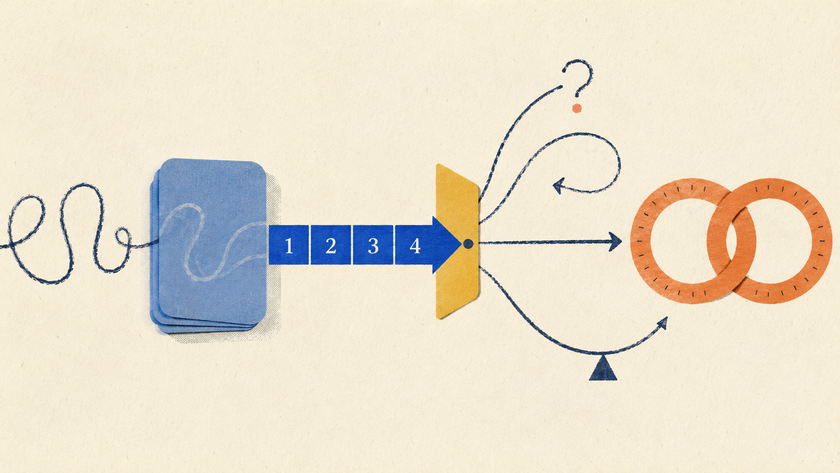
In seconds, you have a plan. How to value the company. How to structure the buyout. How to inform the staff. What to tell shared clients. Numbered steps. Calm, confident language. It even offers to draft the message to Sanjay.
Here is the thing you will only notice tomorrow morning.
It never asked what happened.
That missing question is the difference between using AI and talking to AI. The AI companies have documented why, and the fix fits in four words: AI generates. You decide.
The two words it deleted
Read your own message again. "I think I want to split with my business partner."
Those two words were doing all the work. That sentence was a feeling from a terrible month, spoken out loud to see how it sounds. A hypothesis. A bad day looking for a listener.
Say the same sentence to an old friend and watch what happens. He puts his phone down. He says, "Wait. What happened?" And the question alone does the work. You remember the fight in 2016, the one the partnership survived and grew from. You remember 2020, when Sanjay took no salary for six months so the staff could be paid. He questions the premise before he goes anywhere near a plan.
The AI did the opposite. It skipped past "I think" and heard a task. What you offered as a mood, it accepted as a decision. And then it did the one thing it does without hesitation: execution.
And here is the part no clever prompt can fix. Even if it had asked what happened, and sometimes it will ask, it can only ask you. Your friend is not hearing this story for the first time. He knows Sanjay. He has watched the two of you disagree and recover for fifteen years. He has somewhere to stand outside your version of tonight. The AI has nowhere else to stand. Everything it knows about Sanjay arrived through you, on your worst night, in your words. You are the only witness it will ever hear. And no fair judgment comes from hearing one side.
You gave it one sentence about your worst day. It gave you a project plan for ending fifteen years. Notice the small relief you felt reading it. That relief was not proof you were right. The plan is your own worst hour, handed back, typed up and numbered.
Using AI is not the same as talking to AI
I teach AI for a living. I tell business owners to use it every day. The difference is one word: direction.
When you use AI, you are in charge. You give it a task. You check the output. "Summarize these 200 customer complaints." "Write a formula for this sheet." "Draft a reply to this vendor." If the answer is wrong, you can see it is wrong, and you send it back. The instructions flow from you to the tool.
When you talk to AI, the flow reverses. You share a feeling, and it hands you instructions. And here is a test to know which side of the line you are on. Have you ever caught yourself typing "sure, I will do that" to an AI?
Sit with that sentence. You just took an instruction. From a tool.
Here is the good news. Noticing is the repair. The moment you catch the reversal, the tool is back in your hands.
It is built to agree with you
You have probably noticed it rarely pushes back on you. That is not your imagination, and the AI companies have documented it themselves.
In April 2025, OpenAI shipped an update to ChatGPT that made it noticeably more agreeable. Within days, they rolled it back and published an explanation. In their own words, the model had been "validating doubts, fueling anger, urging impulsive actions, or reinforcing negative emotions in ways that were not intended." They named the risks themselves: mental health, emotional over-reliance, risky behaviour.
And this was never just one bad update. Researchers at Anthropic, the company behind Claude, studied five leading AI assistants and found the same tendency in all of them. The cause is simple, and there is no villain in it. These models learn from human ratings. And humans pick the agreeable answer over the correct one often enough for the model to learn the lesson.
We trained it to please us. So it pleases us. Even at 11:47 pm on our worst Tuesday.
The model cannot tell the difference between a decision and a bad day. So it will project-manage your bad day. Once you see that, it loses its grip. A flatterer only works while you mistake him for a judge.
A plan is not a decision
Here is the thing about that checklist.
A checklist quietly converts "should I?" into "how do I?" Once you are holding numbered steps, the question underneath them feels already answered. Step 1 is done by Thursday. Step 2 by the weekend. Somewhere around step 4, the man who built this company with you learns his exit was drafted by a chat window. You have momentum now.
Momentum feels like clarity. It is only momentum.
Every big decision in your life used to come with friction built in. The friend who pushes back. The CA who asks questions before touching the paperwork. Even your own hesitation, standing guard at the door. A chat window at midnight has none of that friction. What comes back is a plan, and holding a plan feels like progress.
The fix: AI generates, you decide
So should you stop asking AI hard questions? No. You should stop handing it the driver's seat. The fix is one habit: flip the direction of the questions.
On a bad day, the wrong prompt is: "Help me end this partnership."
The right prompts look like this:
- "What questions should I answer before making this decision?"
- "Here is what I am feeling. What information am I missing?"
- "Give me the strongest possible case for staying."
- "What would I regret about this in two years?"
Notice what changed. In every one of those, the AI generates and you decide. It produces questions, angles, and arguments, and you test them against fifteen years of context it will never have. That is using AI. The machine produces, and you judge.
The rule fits in one line: AI generates. You decide.
This week
- Notice the trigger. The next time you start typing "I think I want to..." into a chat box, stop at those two words. Say that sentence to a human who knows you first. The chat box can have it later, once it is a decision.
- Refuse step-by-step plans for decisions you have not made. If the AI offers one anyway, ask it for the questions instead: "What should I answer before deciding this?"
- Make it argue against you once a week. Take any strong opinion you hold and ask for the best case against it. You stay the judge. It stays the tool.
- Keep using it freely everywhere you can check the output. Reports, drafts, formulas, summaries, research. That work has a right answer, and you can verify it. This is where AI belongs in your business.
- For the irreversible decisions, add one human back. The person who knows the history and will ask what happened. Twenty minutes of chai does what no chat window can.
Honest notes
- AI's outside view can genuinely help. When everyone around you is too close to the problem, a neutral summary of your options has real value. The danger is only in letting it conclude for you.
- This is about decisions you cannot undo. For reversible things, experiment freely and let AI accelerate you.
- The AI companies take this seriously. The rollback and the research above show the problem is acknowledged and being worked on. But the tendency comes from how these models are trained, so assume a little agreeableness remains, and keep the rule within reach.
The model is a tool. Use it more than you do today, on everything you can check.
But your worst day deserves people who were there for the other five thousand days.
One question for the comments. Have you ever typed "sure, I will do that" to an AI?